Event Lowry Hill
Trisha Brown Dancers Honor Rauschenberg on a Lowry Hill Stage
A November program co-presented with Northrop revives postmodern dance landmarks for one night.
Friday, November 14, 2025 2:15 PM Lowry Hill
A November program co-presented with Northrop revives postmodern dance landmarks for one night.
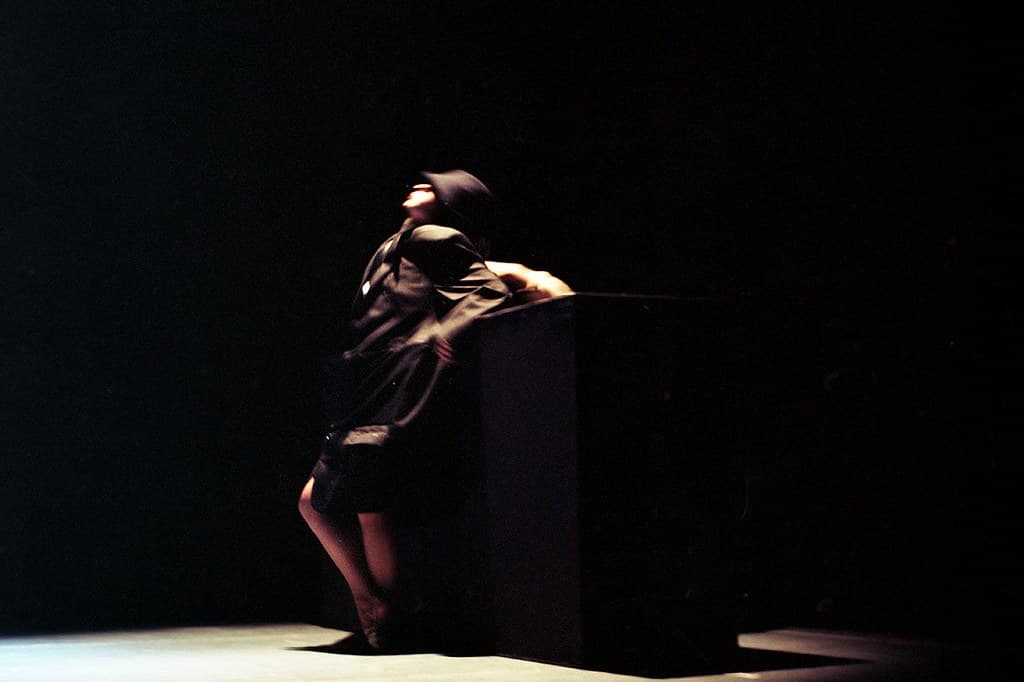
The Trisha Brown Dance Company arrives in town on November 11 for a single evening that the Walker Art Center is co-presenting with the University of Minnesota's Northrop. Built around the centennial of the artist Robert Rauschenberg, the program sets Brown's "Set and Reset" beside Merce Cunningham's rarely staged "Travelogue" — a pairing that maps a whole era of American dance in one night. For a region that does not often get the canon of postmodern dance performed live, a bill like this is an unusual gift, and a tightly themed one.
"Set and Reset" carries a score by Laurie Anderson; "Travelogue" is set to music by John Cage. Together the two pieces trace the circle of midcentury collaborators who turned American dance inside out — Brown, Cunningham, Cage, Anderson and Rauschenberg among them — with Rauschenberg's designs threading through both works. To see them on the same stage is to watch a network of friendships and influences made visible, decades after the fact.
That is the quiet ambition of the program. Rather than present one company in isolation, it stages a conversation between artists who actually knew and worked with one another, using the centennial of one of them as the occasion to bring the whole circle back into a single room — access to something the rest of the country has to travel for, a short walk from Lowry Hill.
Study by day, watch by night
The evening dovetails with the museum's gallery display of materials from Rauschenberg's "Glacial Decoy," so audiences can study the costumes and designs by day and then watch the lineage move on stage at night. That pairing — the static artifact in the gallery, the living performance in the theater — is exactly the kind of cross-disciplinary programming the Walker is built to do, treating dance, design and visual art as parts of one story rather than separate departments. A night that fuses a touring company, a local co-presenter and the museum's own collection does not happen everywhere, and it does not happen often.
A marquee night that will move
Tickets move quickly for the Walker's marquee dance evenings, and a co-presentation on this scale tends to sell faster than the museum's experimental midweek shows. A single performance, a famous company and a built-in audience from two institutions add up to a night that is likely to fill — so neighbors who want to be there are best served deciding early rather than waiting for the week of. For anyone who has only encountered Brown, Cunningham or Rauschenberg in a textbook, an evening like this is the rare chance to see why they mattered: not as history, but as work still alive enough to move across a stage.
Other events
The neighborhood, in your inbox
Free. No paywall. Pick the topics you want — we send what’s happening this week.