NeighborhoodLowry HillLake of the Isles
The Lowry Hill Tunnel, Half a Century Under the Hill
Completed in late 1971, the I-94 tunnel carries the freeway beneath Lowry Hill and reshaped the neighborhood's edge.
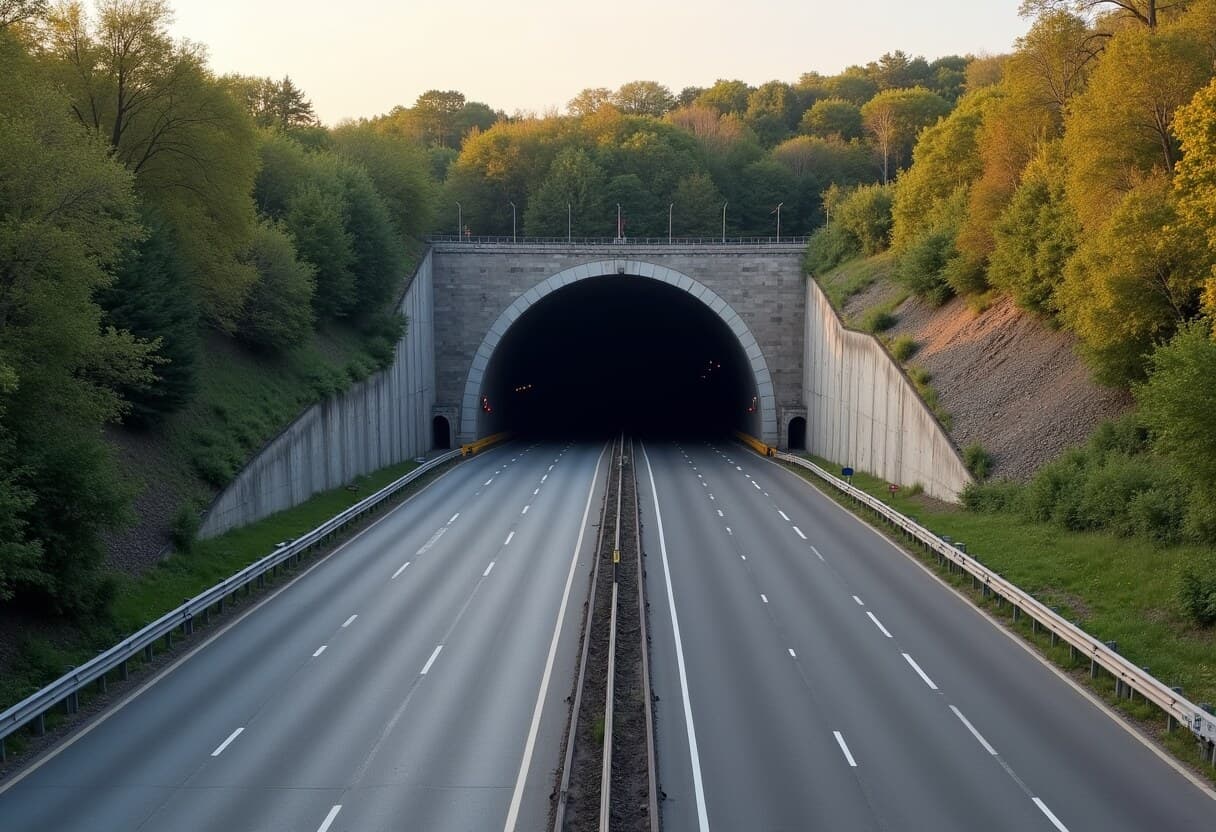
Completed in late 1971, the I-94 tunnel carries the freeway beneath Lowry Hill and reshaped the neighborhood's edge.
The Lowry Hill Tunnel carries Interstate 94 beneath the hill near downtown Minneapolis. At 1,496 feet in length, it was completed in late 1971 and remains one of the more distinctive pieces of freeway engineering in the metro.
The tunnel was part of the same wave of mid-century freeway building that reshaped the edges of the neighborhood. It was the building of I-94 and the Lowry Hill Tunnel that prompted the relocation of the Thomas Lowry memorial from the Virginia Triangle to Smith Triangle Park in 1967. The ridge that made Lowry Hill desirable — high ground above the old milling district — is the same ridge the engineers bored through, rather than cutting an open trench through the mansion district above.
For the neighborhood, the tunnel and the open freeway trenches around it do double duty as borders. The Lowry Hill Neighborhood Association describes the neighborhood as enclosed by I-394 on the north and I-94 and Hennepin Avenue on the east, with 22nd Street to the south, and Lake of the Isles to the west — edges that have kept its footprint stable for half a century.
That isolation has costs and benefits. The freeways carry noise and divide the hill from its neighbors, but they also spared the interior streets the through-traffic that erodes other close-in neighborhoods, helping preserve the quiet that residents prize.
For residents on the blocks nearest the tunnel and the open freeway trenches, the interstate is a constant if largely invisible neighbor — felt in traffic noise and air quality more than seen. Sound walls, landscaping and the tunnel itself all soften the impact, but the freeway's presence is part of life on the eastern edge of the hill.
Mid-century freeway planning reshaped many Minneapolis neighborhoods, and the decision to tunnel rather than trench beneath Lowry Hill spared a historic district that an open cut would have gutted. Half a century on, most drivers passing under one of the city's grandest residential districts never notice they are doing so.
NeighborhoodLowry HillLake of the Isles
Related stories

Neighborhood
The end is in sight for Loring Park dandelion fountain's drought
State lawmakers approved $1.8 million for Berger Fountain repairs, and Park Board crews have begun demolition at the dry Loring Park landmark.
Neighborhood
The neighborhood, in your inbox
Free. No paywall. Pick the topics you want — we send what’s happening this week.