NeighborhoodLowry Hill
The Highest Point in Minneapolis Is in Your Neighborhood
The Charles J. Martin House, a 1903 landmark at 1300 Mount Curve Avenue, crowns the Lowry Hill ridge that gives the neighborhood its name.
The Charles J. Martin House sits on nearly an acre at 1300 Mount Curve Avenue, atop the ridge that gives Lowry Hill its name. Designed by Minneapolis architect William Channing Whitney and built in 1903 in the Renaissance Revival style, the mansion was added to the National Register of Historic Places in 1978. The city designates it a local landmark.
The ridge is the reason the house is here. Lowry Hill takes its name from the steep "devil's backbone" running through it, named in turn for the 19th-century real estate and streetcar magnate Thomas Lowry. The high ground drew the city's milling and lumber families, who wanted to live above the smoke and noise of the downtown milling district, with a prospect over the city below.
The hill is sometimes promoted in real estate listings as the highest point in Minneapolis, but that title belongs to Tower Hill in Prospect Park, where the Witch's Hat water tower stands at roughly 951 feet, the spot the city generally cites as its summit. Lowry Hill is one of the more prominent ridges closer to downtown, not the city's true high point.
Charles J. Martin built the house while serving as secretary and treasurer of the Washburn-Crosby Company, the flour miller that reorganized into General Mills in 1928. In the 1950s the house was home to Antal Dorati, conductor of the Minneapolis Symphony Orchestra; it later served for a time as the Colombian consulate under owner Fernando Torres, a University of Minnesota neurologist.
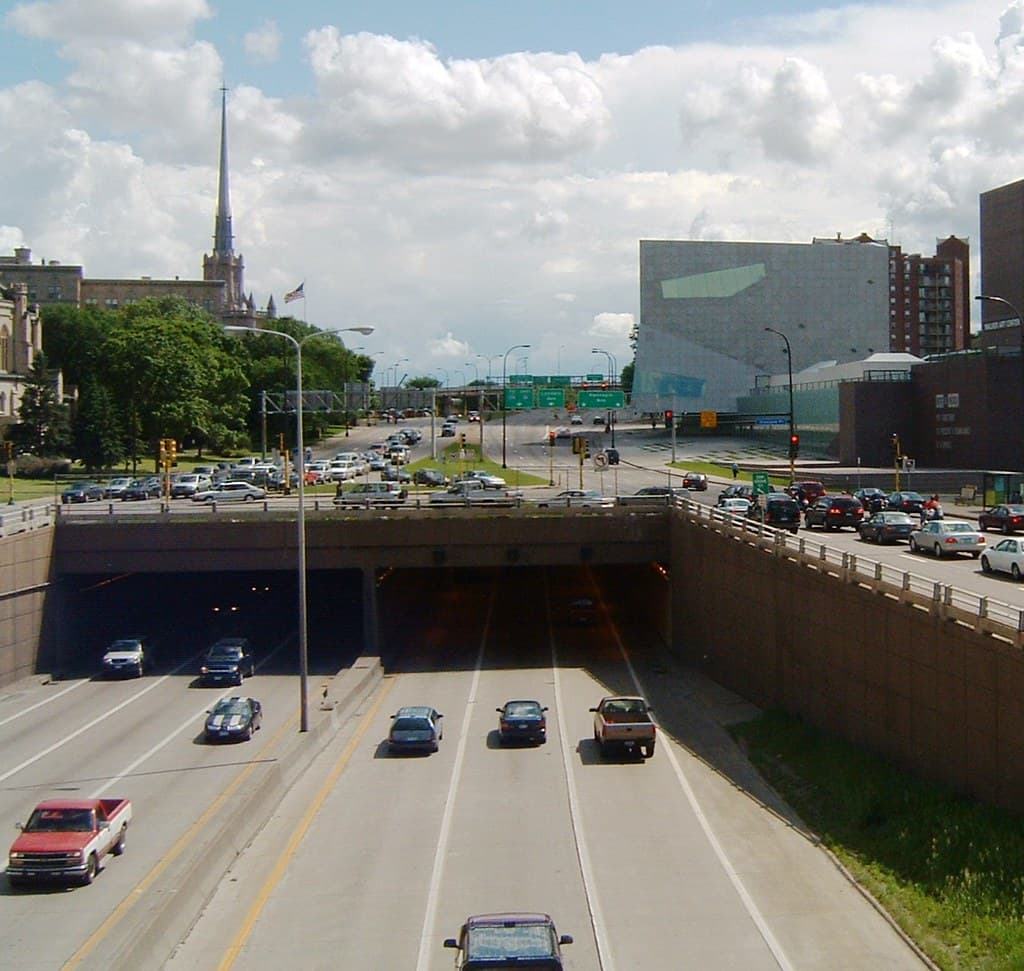
The elevation also shaped the infrastructure around the hill. The Lowry Hill Tunnel carries Interstate 94 through the bluff rather than over it, a mid-century routing decision that spared the historic blocks on top. Standing on Mount Curve today, the view over the city is the same asset that drew builders here more than a century ago.
NeighborhoodLowry Hill
Related stories

Neighborhood
The end is in sight for Loring Park dandelion fountain's drought
State lawmakers approved $1.8 million for Berger Fountain repairs, and Park Board crews have begun demolition at the dry Loring Park landmark.
Neighborhood
The neighborhood, in your inbox
Free. No paywall. Pick the topics you want — we send what’s happening this week.