NeighborhoodLowry Hill
The Donaldson Mansion, a 1906 Arts and Crafts Survivor
Built for a member of the Donaldson department-store family, the nearly 9,600-square-foot house is one of Lowry Hill's finest.
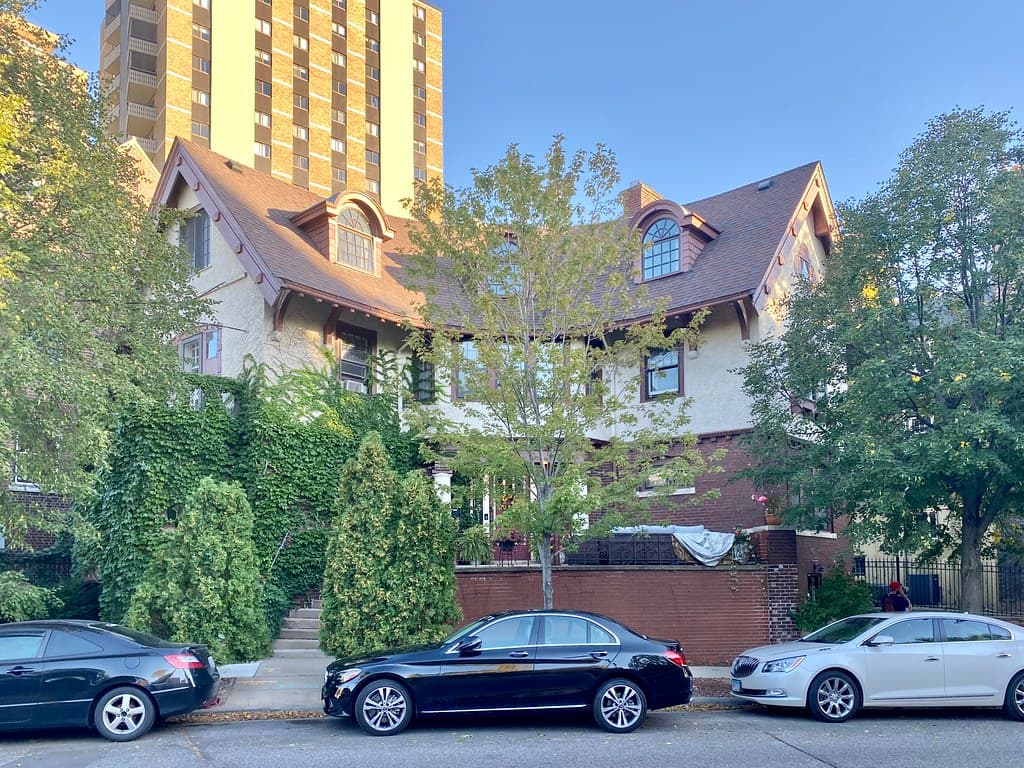
Built for a member of the Donaldson department-store family, the nearly 9,600-square-foot house is one of Lowry Hill's finest.
The Donaldson house, an Arts and Crafts-influenced residence, was constructed in 1906 for Lawrence Donaldson and remained in the original family until 1959. At roughly 9,574 square feet, it is among the larger and finer properties on the hill. It was designed by the prominent Minneapolis firm of Kees and Colburn, whose other work includes the Grain Exchange and the Donaldson's office building downtown.
Like many of its neighbors, the house was built at the crest of the neighborhood's boom years, when lots on and near Mount Curve Avenue commanded the highest prices in the city. The Donaldson name connects it to the family behind one of downtown's major department stores, tying the house to the commercial history of the wider city. Real-estate listings over the years have described it as one of the finest properties in Minneapolis, language that says as much about Lowry Hill's reputation as about the house itself.
The Arts and Crafts style sets the Donaldson house slightly apart from the Renaissance Revival and Italian Renaissance neighbors that also line the ridge. In a neighborhood where the dominant note is the Renaissance Revival of the milling barons, the house is a reminder that the hill's builders drew on the full vocabulary of early-20th-century American architecture.
That the house stayed in one family for more than half a century is part of why it survives so intact, a pattern common to the best-preserved homes on the hill. Houses that pass through many hands, or get carved into units, tend to lose their original detail; those held by stewardship-minded owners keep it. When such houses come to market — the Donaldson has, in the multimillion-dollar range — the listings double as local history lessons, drawing attention to the architects and families behind the hill's grandest blocks.
Lowry Hill preservationists make the case that the avenue's value lies not in any single style but in the unbroken run of intact estates from roughly 1900 to 1910, and that each one that survives strengthens the others.
NeighborhoodLowry Hill
Related stories

Neighborhood
The end is in sight for Loring Park dandelion fountain's drought
State lawmakers approved $1.8 million for Berger Fountain repairs, and Park Board crews have begun demolition at the dry Loring Park landmark.
Neighborhood
The neighborhood, in your inbox
Free. No paywall. Pick the topics you want — we send what’s happening this week.